
What It’s Like to Stay on a Floating B&B
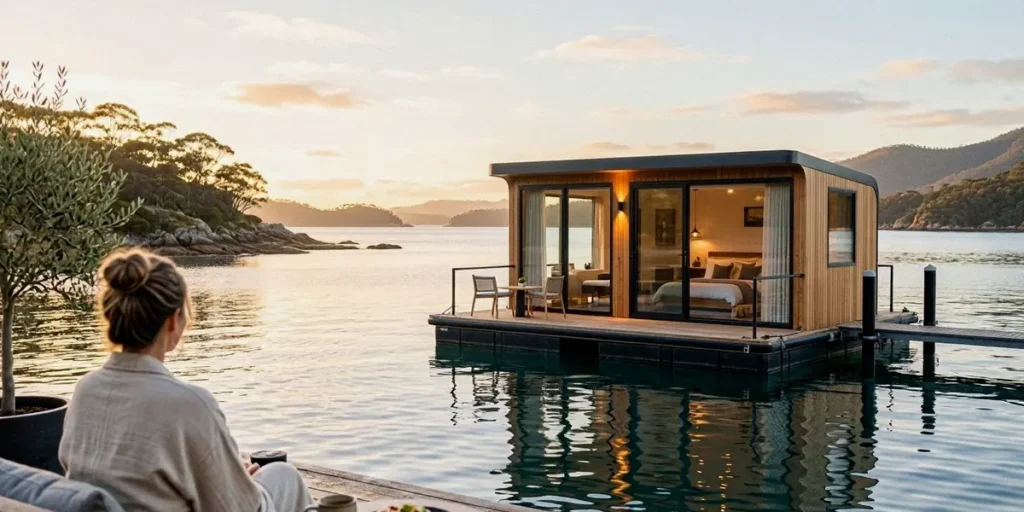
The hull creaks once, softly, and the whole room tilts just enough to remind you that you’re not in a hotel. We woke to light bouncing off the water and onto the ceiling, a pelican landing somewhere close by, and the smell of timber warmed by the morning sun. That was the moment it clicked: a floating B&B isn’t a hotel room with a water view. It’s a completely different way to wake up.
Why We Booked a Floating B&B in the First Place
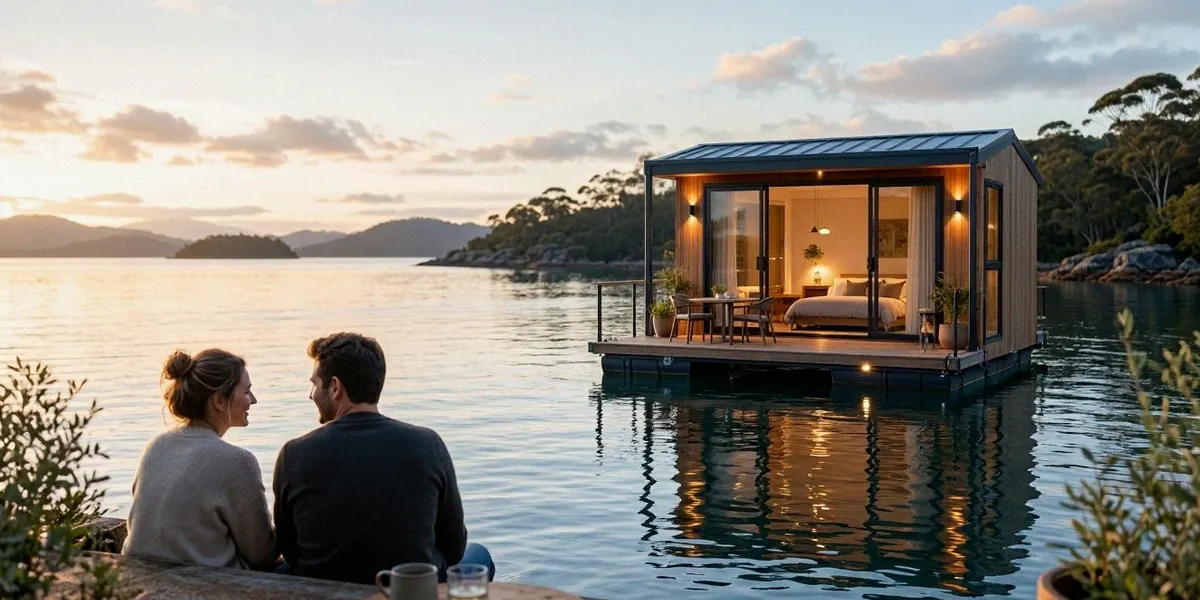
We’d stayed in cabins, glamping tents and the odd converted church, but the idea of sleeping on a boat without actually having to pilot one kept nagging at us. A floating B&B promised the romance of a houseboat holiday without the price tag of a full luxury houseboat charter — and without the stress of navigating a lock or mooring a 12-metre vessel after a glass of wine. We spent a week comparing listings on Airbnb and Stayz, looking at everything from Airbnb houseboats on the Hawkesbury River to dedicated floating B&Bs on the Murray River, before settling on a small moored stay near Echuca.
The difference between a houseboat holiday and a floating B&B
A houseboat holiday usually means you’re the captain. You hire the boat, get a briefing on the engine and the toilet system, and spend your days cruising and mooring. A floating B&B flips that: the boat stays put, someone else handles the logistics, and you get breakfast. Murray River houseboat holidays are hugely popular in Victoria and South Australia, but the floating B&B model suits travellers who want the water without the responsibility.
What we expected versus what we got
We expected something a bit cramped, a bit rustic, and possibly a bit wobbly. What we got was a cleverly fitted-out timber interior, a proper bed, a deck big enough for two chairs and a bottle of wine, and a level of quiet we hadn’t experienced in years. It felt less like camping on water and more like a tiny house that happened to float.
Arrival and First Impressions: Boarding the Floating B&B
Check-in happened at a marina, not a reception desk. Our host met us at the pontoon, walked us down the ramp and handed over a welcome hamper — local sourdough, cheese, a bottle of Shiraz and a handwritten note about the best spot to watch the sunset. The interior smelled of timber and salt air, and the layout was compact but genuinely clever: bed at one end, kitchenette at the other, bathroom tucked in between. Floating B&Bs near Echuca and along the Hawkesbury River in New South Wales follow a similar pattern, though some are more off-grid than others.
What the host showed us before we settled in
Before leaving us to it, our host ran through the essentials:
- How the solar power and battery system worked, and what we could and couldn’t run at once
- Where the composting toilet was and how to use it properly
- How to top up the water tank and where the spare drinking water was stored
- Which kayaks and fishing rods were ours to use, and where the life jackets lived
- The emergency contact number and the marina’s quiet hours
Our first sunset on the deck
We sat on the deck with the hamper wine and watched the light go orange across the water. A few kayakers paddled past, a couple of cockatoos made an unreasonable amount of noise, and then everything went still. It was the first time in months neither of us had reached for a phone.
What a Typical Day on a Floating B&B Feels Like
The rhythm of a day on the water is different. There’s no commute, no queue for coffee, no real reason to be anywhere at any particular time. Some floating B&Bs come with kayaks, fishing gear and a small BBQ, which shapes the day more than you’d expect. And for a bucket-list contrast, Yellowknife houseboat stays on Great Slave Lake in Canada offer a very different version of the same idea — ice fishing in winter, midnight sun in summer.
Mornings: coffee, birdsong, and gentle rocking
We made coffee on the little gas burner and drank it on the deck while pelicans drifted past like they owned the place. The rocking is constant but gentle — more soothing than unsettling, at least for us.
Afternoons: swimming, fishing, or just floating
Midday meant a swim off the back of the boat, a lazy attempt at fishing, and a long stretch of doing absolutely nothing. If you’ve brought kayaks, this is when you’d paddle a quiet bend of the river and pretend you’re exploring.
Evenings: sunsets, stars, and no TV
There’s no television on most floating B&Bs, and that’s the point. We played cards, cooked something simple on the BBQ, and watched the stars come out over the water. The silence at night is the kind you don’t get in a caravan park.
The Practical Stuff: Comfort, Space, and Off-Grid Realities
We’d be lying if we said it was all romance. Floating B&Bs come with trade-offs, and it’s worth knowing them before you book. Many Australian floating B&Bs run on solar power and composting toilets, and some are fully off-grid while others are tied to a marina with shore power.
Bathroom and shower: what to expect
The bathroom is the smallest room on board. Showers are usually short and often on a timer or a limited tank. Composting toilets are common and perfectly fine once you’ve had the two-minute explanation — just don’t expect a spa bathroom.
Power, Wi-Fi, and phone signal
Solar and battery systems handle lights, phones and a small fridge. Hairdryers, kettles and anything with a heating element are usually off-limits. Wi-Fi is patchy or non-existent, and phone signal depends entirely on where you’re moored.
Sleeping: the best and worst nights
The gentle rocking put us to sleep faster than any white-noise app. The trade-off is that wind, passing boats and a change in current can wake you. Our second night was choppier, and we were glad we’d packed earplugs.
Who a Floating B&B Is Actually For (And Who Should Skip It)
Houseboat holidays Australia-wide are growing in popularity, especially in Victoria and NSW, and it’s easy to see why. But a floating B&B isn’t for everyone.
Best for couples and small groups
Couples, small families and anyone who loves unique stays and slow travel will get the most out of it. It’s also ideal for people who want a waterfront stay without paying resort prices.
Not ideal for light sleepers or motion-sensitive travellers
If you get seasick easily, need fast Wi-Fi for work, or want resort-style amenities, this probably isn’t your stay. Light sleepers should also think twice — the water doesn’t stop moving just because you’re tired.
Tips for Booking Your Own Floating B&B Stay
Booking a floating B&B is straightforward once you know what to check. Platforms like Airbnb and Stayz list floating B&Bs and houseboats across Australia, and local houseboat hire companies often have their own direct listings too.
When to book and what to ask
Summer weekends book out months in advance, so plan early. Before confirming, ask:
- Is the boat moored or does it move during the stay?
- Are kayaks, a dinghy or fishing gear included?
- Is there shore power, or is it fully solar?
- What’s the cancellation policy if the weather turns?
- Is there phone signal at the mooring?
What to pack that you wouldn’t bring to a hotel
Bring earplugs, a torch, warm layers for the deck at night, reef-safe sunscreen, and a refillable water bottle. Leave the hairdryer and the suitcase full of shoes at home — space is tight and power is precious. If a Yellowknife houseboat stay is on your dream list, pack for cold instead of sun, but start with something closer to home on the Murray or the Hawkesbury.
FAQ
Are floating B&Bs safe for families with young children?
Generally yes, provided children wear life jackets on the deck and you follow the host’s safety briefing. Most floating B&Bs supply jackets, and the boats are moored rather than moving.
Do floating B&Bs have proper toilets and showers?
Yes, but expect a composting toilet and a compact shower with limited hot water. Many Australian floating B&Bs run on solar power and composting toilets to keep the setup off-grid.
Can you stay on a floating B&B in winter?
Some are available year-round with heating, especially on the Murray River. Others close over the colder months. Always confirm before booking.
How much does a floating B&B cost compared to a houseboat charter?
Usually less. A floating B&B typically costs a fraction of a full houseboat charter because you’re not paying for the boat to move or for a skipper.
Is Yellowknife really worth it for a houseboat stay?
Yellowknife in Canada is famous for houseboat stays on Great Slave Lake, and it’s genuinely a bucket-list trip — but it’s a long-haul destination. Start with an Australian option first to see if the floating life suits you.
A floating B&B isn’t about luxury. It’s about slowing down, paying attention to the water, and letting the day find its own shape. If you’ve never slept on the water, try a unique stay like this at least once — you might find, as we did, that the gentle rock is the whole point.