
Seeing the Northern Lights from the Water: A Floating B&B Adventure
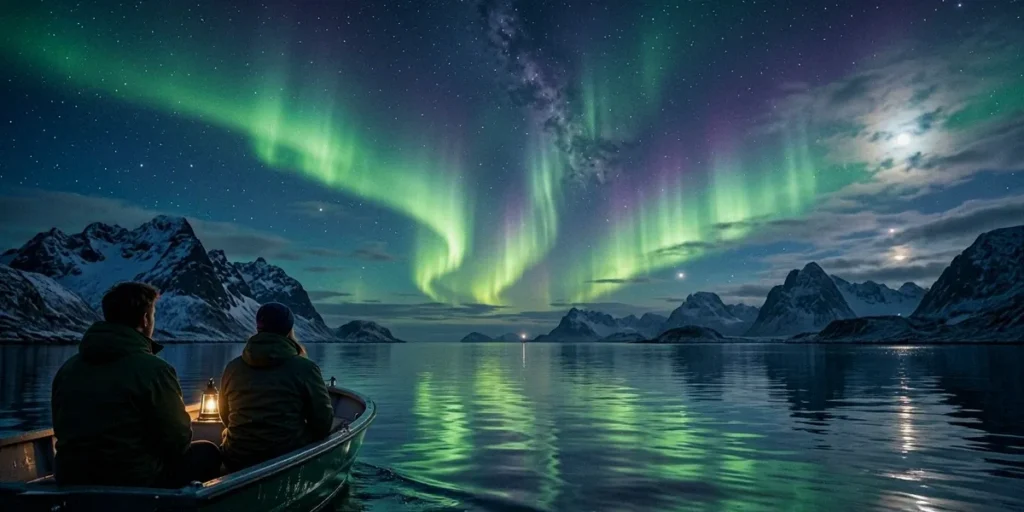
There’s a moment that happens on a floating B&B in Yellowknife that no photograph quite captures. You’re standing on the deck of a small houseboat, wrapped in a thermal suit, coffee going cold in your hand, when the aurora borealis unfurls across the sky — and then it happens again in the water beneath you. The green ribbons ripple across Great Slave Lake like the sky has been mirrored. We’ve watched the Northern Lights from plenty of places, but nothing compares to seeing them from the water. The reflections double the spectacle, the silence is total, and there’s no tour bus idling behind you. This is aurora watching the way it should be done.
Why a Floating B&B Beats a Traditional Aurora Lodge
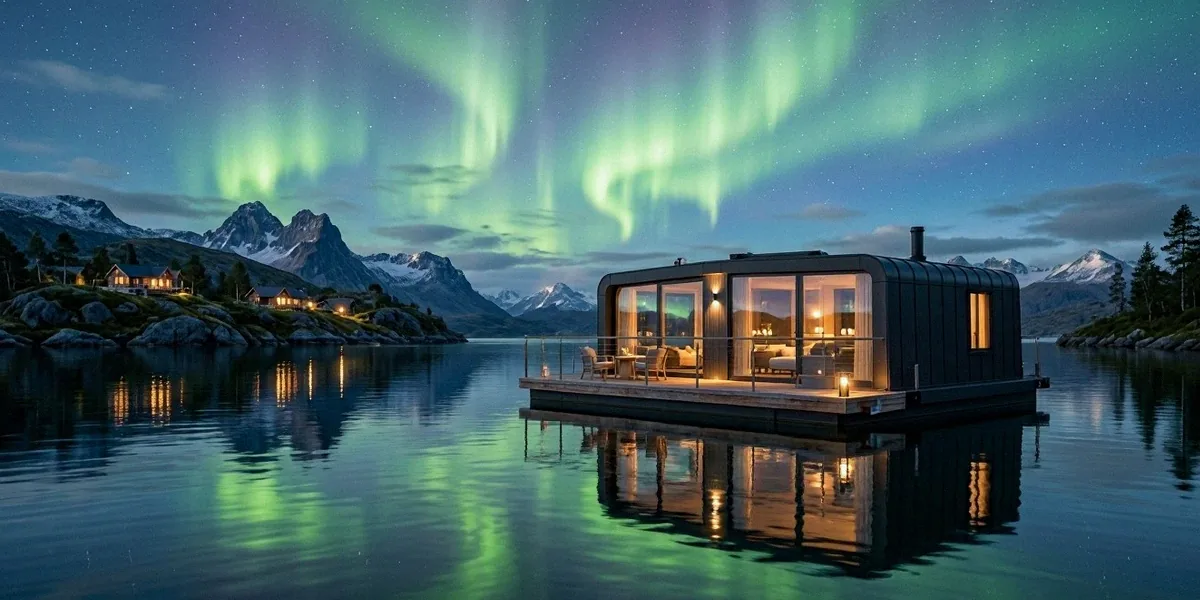
Aurora lodges are comfortable, but they come with compromises: other guests, ambient light, and a fixed viewing angle. A floating B&B solves all three. On a houseboat moored on Great Slave Lake, the horizon wraps around you at 360 degrees, the only light comes from the stars and the aurora itself, and your group is usually just a handful of people. In Yellowknife, aurora season runs from late August to mid-April, which means a floating stay can work across an eight-month window — far longer than most travellers realise.
Unobstructed Views and Water Reflections
On land, trees, buildings, and ridgelines cut into your view of the aurora. On the water, there’s nothing between you and the sky. Better still, a calm lake surface acts as a second canvas. When the aurora is active, you’ll often see it mirrored below you, effectively doubling the display. Photographers we’ve spoken to in Yellowknife say the reflections are the single biggest reason they choose a floating stay over a lodge.
Privacy and Small-Group Experience
Most floating B&Bs on Great Slave Lake host between two and eight guests. That means no crowds jostling for tripod space, no strangers wandering into your long exposures, and no rigid schedule. You can step out of a heated cabin at 2am when the aurora alert fires and have the entire sky to yourself.
Access to Remote Viewing Spots
Because houseboats can move, some operators reposition their vessels depending on cloud cover and aurora forecasts. That flexibility is something a fixed lodge simply can’t offer. On a clear night, being moored a few hundred metres from shore removes the last traces of light pollution from the nearby city.
Top Destinations for Aurora Watching from a Houseboat
While houseboat holidays Australia are a growing trend — think the Murray River and the Whitsundays — aurora viewing demands a very different latitude. Here’s where floating aurora stays actually deliver.
Yellowknife, Canada: The Aurora Capital
Yellowknife is known as the aurora capital of Canada, and for good reason: its position under the auroral oval means clear-night aurora sightings are common from late August to mid-April. Great Slave Lake in Yellowknife has a community of floating B&Bs and houseboats, many of them clustered in bays like Yellowknife Bay and Houseboat Bay. Operators such as Aurora Village run aurora-focused programs nearby, while independent floating B&Bs offer off-grid stays with private decks and wood-fired hot tubs.
Scandinavian Lakes and Fjords
Europe has its own floating aurora options. Tromsø in Norway offers fjord-side houseboats within the auroral zone. Finland’s Lake Inari is famous for glass igloos, but a handful of floating cabins and houseboats now operate on the lake. In Sweden, Abisko sits in a rain shadow that produces some of the clearest winter skies in Europe, and floating stays on nearby lakes are slowly appearing.
Other Emerging Floating Stays
Iceland, Greenland, and parts of northern Russia have experimented with floating aurora accommodation, though availability remains limited and seasonal. For Australians, Yellowknife remains the most practical and reliable choice.
What to Expect on a Floating B&B Aurora Stay
Floating B&Bs in Arctic regions are not luxury resorts — they’re intimate, often off-grid, and designed around the aurora. Here’s what a typical stay looks like.
Amenities and Comforts
- Heated cabins with wood stoves or propane heating
- Outdoor viewing decks with seating and blankets
- Hot tubs on some vessels, perfect for warming up mid-watch
- Aurora wake-up calls when activity spikes overnight
- Loan gear including tripods, thermal suits, and headlamps
Guided Tours and Photography
Many floating B&Bs in Yellowknife partner with local photographers who run workshops on the deck. You’ll learn how to frame the aurora over water, how to avoid vibration on a floating platform, and how to time your exposures to the rhythm of the lights. Aurora Village and several independent operators offer these sessions as add-ons.
Meals and Local Cuisine
Expect hearty northern fare: bison stew, Arctic char, smoked whitefish, and plenty of hot coffee and tea through the night. Some hosts prepare meals communally, which is part of the charm — you’ll swap aurora stories with travellers from around the world.
Planning Your Trip from Australia
For Australians, a floating aurora stay takes planning, but it’s far more achievable than most people think.
Best Time to Travel
September to March is the sweet spot. September and early October offer milder temperatures and dark skies; December and January deliver the longest nights; February and March balance cold, clear skies with slightly longer days for other activities.
Flights and Logistics
Australians can fly to Yellowknife via Vancouver or Calgary, with connections through Air Canada, WestJet, or Qantas codeshares. You’ll need an eTA for Canada before departure. Total travel time from Sydney or Melbourne is typically 20–24 hours including layovers.
Packing Essentials for Cold-Weather Floating
- Merino base layers (top and bottom)
- Insulated, windproof outer layers
- Thermal boots rated to -30°C
- Balaclava, gloves, and hand warmers
- Camera tripod and spare batteries (cold drains them fast)
Book six to twelve months ahead for peak aurora season — floating B&Bs are small and fill quickly.
Photography Tips for Capturing the Aurora from Water
Shooting the aurora from a floating platform is different from shooting on land. Here’s how we approach it.
Camera Settings and Gear
Use a sturdy tripod, a wide-angle lens (14–24mm), manual focus set to infinity, and long exposures of 10–25 seconds to capture the aurora and its reflection. ISO 1600–3200 and an aperture of f/2.8 or wider works well. A remote shutter release prevents vibration.
Composition with Water Reflections
Position the horizon low in the frame so the water fills the bottom third. On calm nights, the reflection will be almost as sharp as the sky. On choppy nights, embrace the blur — it can look painterly.
Editing and Sharing Your Shots
Apps like My Aurora Forecast and Space Weather Live help you plan around KP index and cloud cover. For editing, lift shadows gently and avoid over-saturating greens — the aurora is vivid enough on its own.
Is a Floating B&B Aurora Experience Worth It?
We’ll be honest: this isn’t a budget trip. Floating B&Bs in Yellowknife cost more per night than a standard hotel, availability is limited, and weather can ruin even the best-laid plans. But when it works — and it usually does over a three- or four-night stay — it’s unmatched.
Cost vs. Value
Expect to pay a premium for the privacy, the reflections, and the small-group experience. For most travellers, it’s a once-in-a-lifetime splurge.
Who Should Book This
Couples, photographers, and small groups of friends who want a genuinely unique stay. If you’ve done houseboat holidays Australia and loved the pace of life on the water, this is the Arctic version of that same feeling.
Alternatives for Budget Travellers
If a floating B&B is out of reach, land-based aurora lodges, aurora camps, and shared houseboat charters offer cheaper ways to see the lights. You’ll sacrifice some privacy and reflection quality, but the aurora itself doesn’t care where you stand.
Seeing the Northern Lights from a floating B&B combines two bucket-list experiences — aurora watching and unique stays — into one trip. For Australians who rarely see the aurora at all, it’s the kind of journey you’ll talk about for decades. Start planning now, book early, and pack warm.
FAQ
What is the best time to see the Northern Lights from a floating B&B in Yellowknife?
Aurora season in Yellowknife runs from late August to mid-April, with peak viewing between November and March. September and March often offer the best balance of clear skies and comfortable temperatures.
Do Australians need a visa to visit Yellowknife?
Australian citizens need an eTA (Electronic Travel Authorization) for Canada, not a full visa. Apply online before booking flights, and allow a few days for approval.
How do I photograph the aurora from a houseboat?
Use a tripod, a wide-angle lens, manual focus, and exposures of 10–25 seconds. The calm water doubles the aurora’s intensity in your frame, so compose with the horizon low to capture both sky and reflection.
Are floating B&Bs in Yellowknife suitable for first-time aurora watchers?
Yes. Most hosts provide aurora wake-up calls, thermal suits, and photography guidance, making floating stays accessible even if you’ve never chased the lights before.
How far in advance should I book a floating B&B for aurora season?
We recommend booking six to twelve months ahead. Floating B&Bs on Great Slave Lake are small, often hosting fewer than eight guests, and peak-season dates sell out quickly.