Off-Grid Living: Power and Water Afloat
The first time we woke up on a houseboat with no shore power, it was 5:47am on the Murray River and the only sound was water lapping against the pontoon. No hum of a marina, no generator running, no cable tying us to the bank. Just a kettle boiled on stored solar energy, a fridge still cold from yesterday’s sunshine, and the slightly unnerving realisation that everything keeping us comfortable was entirely our responsibility. That morning sums up off-grid houseboat living: exhilarating freedom, paired with the quiet pressure of managing your own power and water. Over the years, we’ve spoken with floating B&B owners across Australia — and a few hardy souls in Canada — to understand how they make it work. Here’s what we’ve learned.
Why Off-Grid Living Appeals to Houseboat Owners
Off-grid systems aren’t just a technical workaround for mooring away from marinas. For many owners, they’re the whole point. Independence, lower ongoing costs, and a lighter environmental footprint all stack up — and guests notice.
Freedom from Marinas and Shore Power
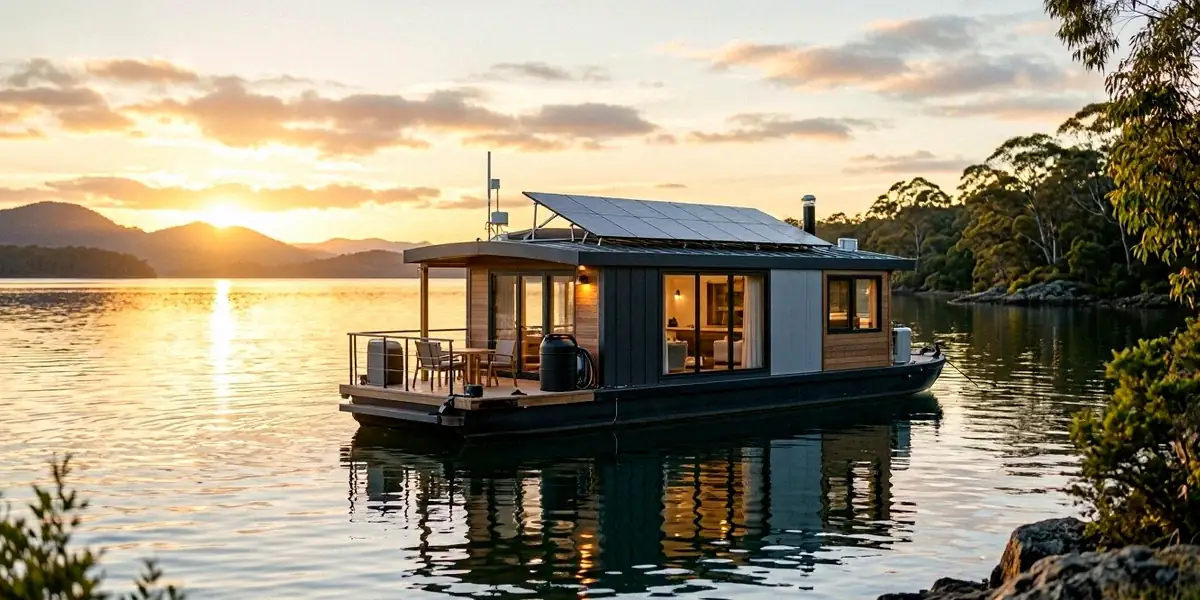
When your floating B&B generates its own electricity, you’re not limited to berths with a power pedestal. That opens up quiet anchorages, remote stretches of river, and overnight stays in places no marina could ever reach. We’ve met owners who deliberately choose moorings with no services at all, because the silence is what their guests are paying for. There’s also a practical upside: no marina fees, no long power leads, and no dependence on a single location if berth availability or pricing changes.
Eco-Friendly Appeal for Guests
Off-grid floating B&Bs in Australia increasingly market their solar and water systems as part of the experience, not a hidden necessity. Guests like knowing their shower was heated by the sun and their greywater is being contained and managed properly. It aligns with the broader “unique stays” trend — travellers booking houseboats, treehouses, and off-grid cabins because the stay itself feels purposeful. For operators, it’s a genuine differentiator in a crowded short-stay market.
Powering Your Floating B&B: Solar, Wind, and Generators
Power is the first thing every aspiring off-grid houseboat owner asks us about. The good news: the technology is mature, and Australian operators have plenty of local expertise to draw on.
Solar Panel Setup and Battery Storage
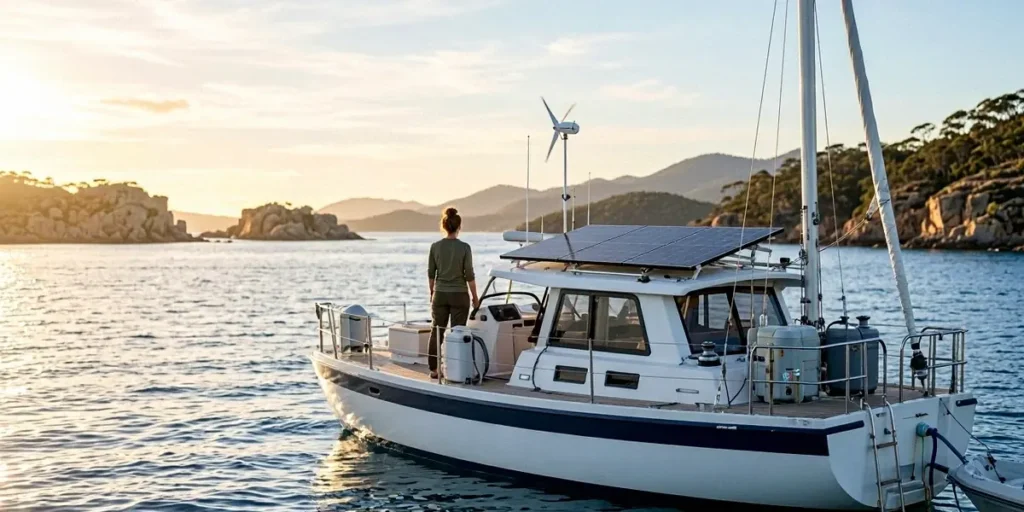
A typical off-grid houseboat setup starts with roof-mounted solar panels feeding a battery bank through a charge controller and inverter. In Australia, Victron Energy and Redarc are the two brands we see most often — Victron for larger multi-component systems with monitoring, Redarc for compact setups and DC-DC charging. Lithium (LiFePO4) batteries have largely replaced lead-acid for new builds because they’re lighter, tolerate deeper discharge, and last longer. A well-sized system on a floating B&B can run lighting, refrigeration, pumps, and device charging comfortably, with air conditioning or induction cooking usually requiring either a much larger array or a backup source.
Wind and Generator Backup Options
Wind turbines can supplement solar on exposed waterways, though they’re noisier and less predictable than panels, so we rarely see them as a primary source. Most owners keep a generator as backup — diesel or petrol — for cloudy spells, high-demand appliances, or winter when solar yield drops. The trick is sizing the generator to charge the battery bank efficiently rather than running it constantly. A hybrid approach, where the generator only tops up the batteries during low-sun periods, keeps fuel use and noise to a minimum.
Water Systems Afloat: Collection, Storage, and Conservation
Water is the second half of the off-grid equation, and on inland waterways it comes with regulatory strings attached.
Rainwater Harvesting and Filtration
Many houseboats capture rainwater from the roof into dedicated tanks, then run it through multi-stage filtration before it reaches taps or showers. Rainman filtration systems are a common sight on Australian houseboats, particularly for turning tank water into safe drinking water. Tank capacity is usually the limiting factor — most floating B&Bs carry enough for several days of guest use, with refills arranged at marinas or via water barges on longer rivers.
Desalination and Water Conservation Tips
For coastal and estuarine houseboats, desalination opens up genuine independence. Spectra Watermakers units are widely used because they’re energy-efficient and can run off a modest solar and battery setup. Inland, desalination isn’t relevant, so conservation matters more. Low-flow showerheads, foot-operated taps, and staggered laundry schedules all stretch a tank further. One important compliance point: Australian regulations often require greywater containment for houseboats in inland waterways, meaning shower and sink water must be stored in a holding tank and pumped out at an approved facility — not discharged overboard. Build this into your system design from day one.
Lessons from Yellowknife: Extreme Off-Grid Houseboating
Yellowknife, Canada, is famous for its off-grid houseboat community on Great Slave Lake, and it’s the closest thing to a masterclass in self-sufficient floating living. Residents there deal with months of ice, temperatures well below -30°C, and no connection to municipal services. The contrasts with Australia are obvious, but the principles transfer.
Winterproofing and Insulation
Yellowknife houseboaters insulate heavily, seal against drafts, and design their hulls and plumbing to survive freeze-up. Wood stoves are common, backed by propane and generator power. In Australia, we don’t face that level of cold, but the lesson applies to heat: insulation, shading, and ventilation reduce the load on your power system dramatically. A well-insulated houseboat in Queensland needs far less energy to stay comfortable than a poorly insulated one.
Community and Self-Sufficiency
What struck us most about Yellowknife is how communal off-grid living becomes. Neighbours share tools, knowledge, and emergency support. Australian houseboat communities along the Murray work similarly — informal networks of owners who trade advice on batteries, pumps, and moorings. Self-sufficiency doesn’t mean isolation; it means knowing who to call when your inverter throws an error code at 9pm.
Off-Grid Houseboat Holidays in Australia: What to Expect
If you’re booking rather than building, off-grid houseboat holidays in Australia are more accessible than ever.
Top Destinations for Off-Grid Houseboating
- The Murray River — Australia’s classic houseboat destination, with long stretches of quiet river and plenty of operators offering solar-equipped vessels.
- The Gold Coast and Queensland waterways — coastal houseboats with desalination and larger solar arrays for warmer conditions.
- Tasmania — smaller, more remote floating stays where off-grid systems are standard rather than optional.
- Echuca, Mildura, and Renmark — Murray River hubs with established houseboat fleets and floating B&B options.
Booking and Preparation Tips
Ask operators directly about power capacity, water tank size, and what happens if you run low. Confirm whether the vessel has a generator backup and how greywater is managed. Pack conservatively — fewer high-draw devices means a smoother trip. And if you’re new to off-grid living, start with a short two or three-night stay before committing to a longer charter.
Is Off-Grid Living Right for Your Floating B&B?
Off-grid isn’t automatically better — it’s a trade-off, and it suits some operators and locations far more than others.
Cost-Benefit Analysis
Upfront costs are real: a quality solar and lithium system, filtration, and holding tanks can add significantly to a build or refit. Against that, you save on marina power fees, gain flexibility in where you moor, and can charge a premium for the off-grid experience. For most operators we speak with, the break-even point sits somewhere between three and seven years, depending on how heavily the boat is used.
Maintenance and Upkeep
Off-grid systems need attention. Panels need cleaning, batteries need monitoring, filters need replacing, and pumps eventually fail. We recommend a simple maintenance log and a spare parts kit on board. Starting with a hybrid system — solar and batteries as the primary source, generator as backup, and shore power when available — lets you learn your real consumption patterns before committing fully.
FAQ
Can a houseboat run entirely on solar power?
Yes, for lighting, refrigeration, pumps, and electronics — provided the solar array and battery bank are sized correctly. High-draw appliances like air conditioning or electric cooking usually need a generator backup or a very large system.
Do Australian houseboats need greywater tanks?
On many inland waterways, yes. Regulations often require greywater containment for houseboats, meaning shower and sink water must be stored and pumped out at an approved facility rather than discharged overboard. Always check the rules for your specific waterway.
What water filtration brands are common on houseboats?
Rainman systems are widely used for filtration and drinking water, while Spectra Watermakers units are popular for desalination on coastal and estuarine houseboats.
How does Yellowknife’s houseboat community survive winter?
Heavy insulation, wood stoves, propane, and generator power keep Yellowknife’s off-grid houseboats habitable through extreme cold on Great Slave Lake. Community support and shared knowledge are just as important as the hardware.
Is off-grid living worth it for a floating B&B?
For operators who want location flexibility, lower ongoing costs, and a strong eco-friendly selling point, it usually is. We suggest starting with a hybrid system and tracking your actual power and water use before going fully off-grid.
Off-grid living on a floating B&B is entirely achievable with careful planning, the right equipment, and a realistic sense of what you’re signing up for. Whether you’re drawing inspiration from the ice-bound houseboats of Yellowknife or planning a solar-powered week on the Murray River, the reward is the same: mornings with no shore power, no noise, and no one else deciding where you wake up. Embrace the adventure — and respect the river, the lake, and the systems that make it all possible.