Yellowknife Bay: Canada’s Houseboat Community
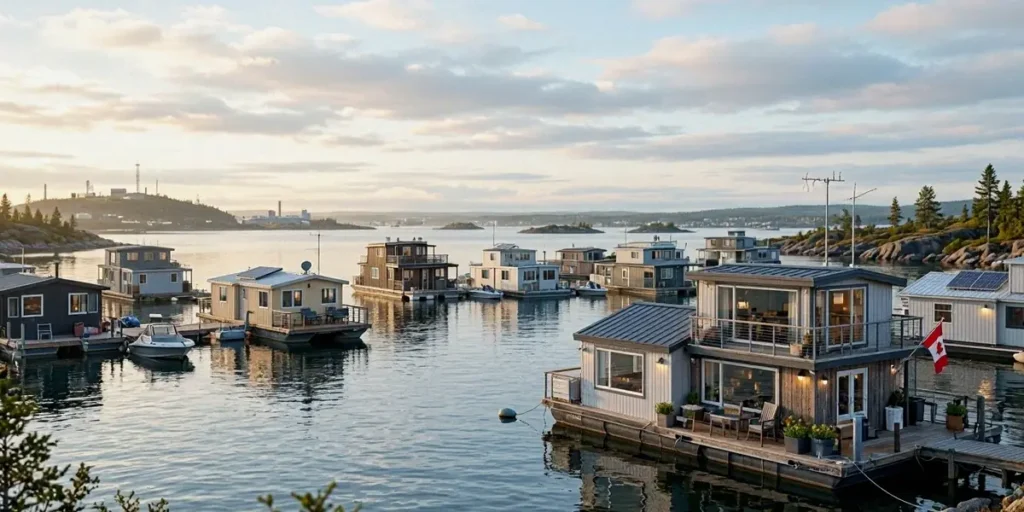
If you’ve ever drifted down the Murray River on a houseboat or moored at Lake Eildon for a long weekend, you know the Australian version of floating holidays: warm water, eucalypts, a sausage sizzle on the back deck. Now picture the opposite. A bay of floating homes locked in ice for half the year, lit by the aurora borealis, sitting on one of the deepest lakes in North America, roughly 400 kilometres south of the Arctic Circle. That’s Yellowknife Bay, and it’s one of the most unusual houseboat communities on the planet.
Why Yellowknife Bay Is a Houseboat Hotspot
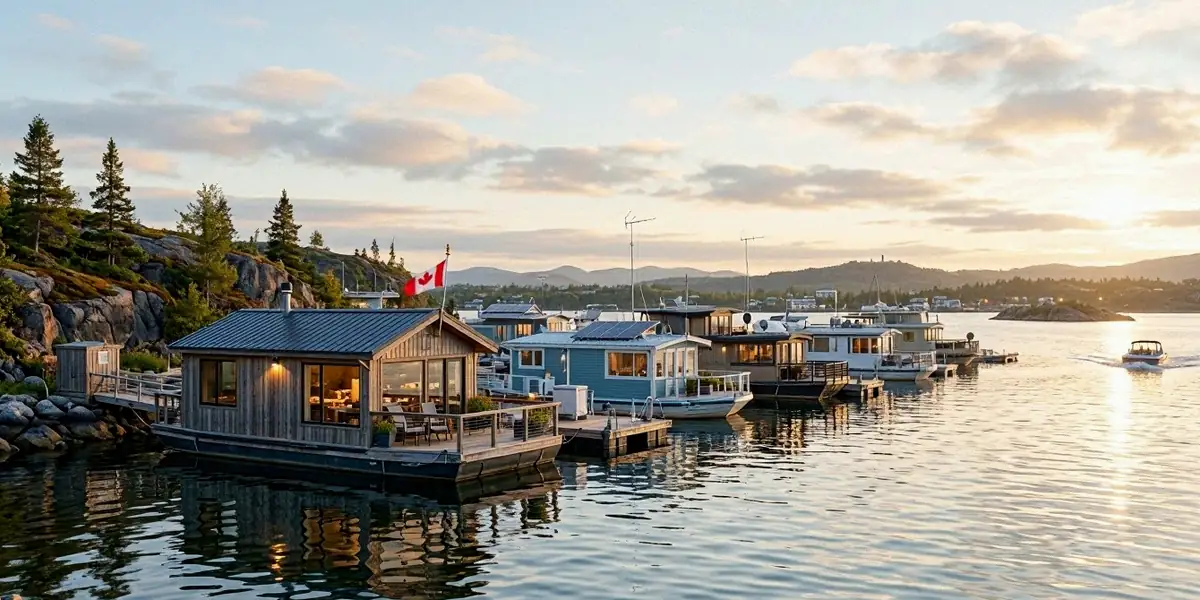
Yellowknife Bay is a sheltered inlet on the North Arm of Great Slave Lake, and it sits right on the doorstep of Yellowknife, the capital of Canada’s Northwest Territories. Great Slave Lake is one of the deepest lakes in North America, plunging to more than 600 metres in places, which makes the bay’s summer water cold, clear and remarkably calm. Because Yellowknife is a genuine northern city with an airport, hospitals and supermarkets, the bay combines wilderness living with real infrastructure — something you don’t get at most remote float destinations.
Access is part of the appeal. In summer, residents and guests move between the mainland and their boats by water taxi, private dinghy or canoe. In winter, once the lake freezes solid, the ice road to Yellowknife Bay becomes a winter attraction in its own right — a marked route across frozen water that visitors drive, cycle and even skate along. The transition between those two worlds, usually in late November and again in May, is the busiest and most nerve-wracking time of year on the bay.
What It’s Like to Stay in a Floating B&B
Staying on the bay is not the same as hiring a houseboat on the Murray. Most floating B&Bs here are stationary — they’re homes first and rentals second — which means you get a neighbourhood rather than a river cruise. Local operator Yellowknife Houseboat Rentals is one of the best-known names offering floating B&Bs and houseboat stays, and there are several independent owners who list cabins and converted barges through the same channels.
Types of Floating Accommodation
The range is wider than most first-timers expect:
- Rustic cabins on floats: simple timber structures with a wood stove, bunks and a composting toilet. Basic, warm and full of character.
- Modern floating homes: fully insulated, with proper kitchens, hot showers, solar power and large windows aimed at the northern sky.
- Converted barges and houseboats: bigger decks, more sleeping space, often used for small groups or aurora photographers.
- Aurora-season stays: some operators keep houseboats available into winter so guests can watch the northern lights from a frozen bay rather than a hotel window.
Amenities and What to Expect
Expect off-grid thinking. Power usually comes from solar panels, a generator or a combination of both. Water is carried in or pumped from a holding tank, and showers are short by necessity. Wi-Fi is patchy and mobile coverage depends on where you’re moored. What you get in return is silence, dark skies and a view that changes by the hour. Many floating B&Bs include a small boat or canoe, a BBQ and a wood-fired sauna — the latter being a genuinely northern tradition.
Booking Tips for Australians
Book early. The bay’s rental stock is small, and aurora season (late August to mid-April) fills fast with photographers and honeymooners. Confirm exactly how you’ll get to and from the boat, whether bedding and food are included, and what happens if the weather turns. Ask about cancellation policies specifically — freeze-up and break-up can shift the access plan at short notice.
The Houseboat Community: A Neighbourhood on Water
What makes Yellowknife Bay genuinely special isn’t the accommodation — it’s the people. This is a real community, not a resort, and it operates on a mix of formal rules and unspoken etiquette that has built up over decades.
Who Lives on the Bay?
The population is a mix of full-time residents who live on the water year-round, seasonal owners who use their boats as summer cabins, and short-stay guests. You’ll meet retired teachers, pilots, artists, mining contractors and young families. Many have been on the bay for twenty years or more, and they know their neighbours’ boats by name.
Life in Winter and Summer
Summer brings the midnight sun — weeks where it barely gets dark — and the bay fills with canoes, paddleboards and fishing lines. Winter is a different planet. The boats sit frozen in place, accessed by the ice road, and residents shovel snow off roofs, keep wood stoves burning and watch the aurora overhead. Freeze-up and break-up are the two great communal events of the year, with everyone watching the ice and helping each other prepare.
Community Events and Culture
The bay has its own informal calendar: summer BBQs on the docks, a long-running floating film night, fishing derbies and winter gatherings around a fire on the ice. If you’re a guest, the golden rule is simple — be quiet, be tidy, and don’t treat the bay like a party venue. This is people’s home.
How to Get There and When to Go
Getting to Yellowknife from Australia takes planning but isn’t difficult. The standard route is a flight from Sydney, Melbourne, Brisbane or Perth to Vancouver, then a domestic connection to Yellowknife — usually via Edmonton or Calgary. Total travel time is typically 24 to 30 hours door to door.
Flights and Access
Air Canada and WestJet both serve Yellowknife year-round. From the airport it’s a short drive to the bay, and from there a water taxi in summer or a vehicle on the ice road in winter. Some operators include transfers; others leave you to arrange them.
Seasonal Considerations
There are two peak seasons, and they offer completely different holidays:
- Summer (June to August): midnight sun, warm-ish days, open water and full water-taxi access.
- Winter (late November to mid-April): aurora borealis, ice road access and a frozen landscape. The aurora is visible in Yellowknife from late August to mid-April, which gives you a long window.
Packing and Preparation
Bring layers, not luggage. Summer still gets cold at night, and winter requires serious gear: down jacket, thermal base layers, insulated boots rated well below zero, gloves and a hat. Australians consistently underestimate northern cold. If you’re visiting in winter, ask your host whether they provide Arctic clothing — many do.
Yellowknife Bay vs. Australian Houseboat Holidays
We love a Murray River houseboat holiday. But the differences here are stark. On the Murray or Lake Eildon, you’re mobile, the climate is mild, and the scenery is river red gums and farmland. In Yellowknife Bay, you’re largely stationary, the climate is extreme, and the view is Precambrian rock, black spruce and — if you’re lucky — dancing green light overhead. Australian houseboating is about relaxing and drifting. Yellowknife Bay is about immersion in a northern environment and a community that has chosen to live on the water for real. Both are wonderful. They are not the same trip.
Our Tips for a Unique Stay in Yellowknife Bay
A few things we’d tell any Australian considering this trip:
- Choose your houseboat based on season, not price. A summer boat may not be winterised, and vice versa.
- Respect the community. Keep noise down, don’t fish off someone else’s dock without asking, and follow any posted rules.
- Book at least one aurora night if you’re travelling between late August and mid-April — many hosts will wake you when the lights appear.
- Try fishing on Great Slave Lake. Lake trout and northern pike are the local specialties, and many operators supply gear.
- Allow a buffer day on each end. Northern weather delays flights more often than most travellers expect.
Yellowknife Bay isn’t a substitute for a houseboat holiday back home — it’s something else entirely. It’s a floating neighbourhood on one of North America’s deepest lakes, in the capital of Canada’s Northwest Territories, where the aurora lights up the sky for eight months of the year and the ice road becomes the main street. If you’re chasing a genuinely unique stay, this is one to put on the list.
FAQ
Can Australians stay on a houseboat in Yellowknife Bay?
Yes. Several operators, including Yellowknife Houseboat Rentals, offer floating B&Bs and houseboat stays to international guests. You’ll need a valid Canadian eTA or visa, and it’s wise to book well ahead for aurora season.
When is the best time to see the aurora from a houseboat?
The aurora borealis is visible in Yellowknife from late August to mid-April. Clear, dark nights between November and March offer the best odds, and staying on the bay gives you dark skies without leaving your accommodation.
How do you reach the houseboats in winter?
Via the ice road, which becomes a winter attraction in its own right once Great Slave Lake freezes. In summer, access is by water taxi, private boat or canoe.
Is Yellowknife Bay suitable for families?
Yes, with care. The bay is calm and the community is friendly, but young children need constant supervision around cold water and, in winter, around ice edges and wood stoves.
How does it compare to a Murray River houseboat holiday?
Completely different. Murray River houseboating is mobile, mild and river-based. Yellowknife Bay is stationary, extreme and lake-based, with a tight-knit residential community and the northern lights overhead.